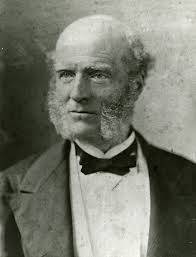
Thomas Hughes
1822 -1896
Thomas Hughes Biography
Thomas Hughes (20 October 1822 – 22 March 1896) was an English lawyer, judge, parliamentarian, social reformer, and novelist. Born in Uffington, Berkshire, he was educated at Twyford School, Rugby School under Thomas Arnold (1834–42), and Oriel College, Oxford, graduating in 1845.
Called to the Bar in 1848, he became a Queen’s Counsel in 1869 and a County Court judge in 1882. Hughes was also deeply engaged in social reform: he co‑founded the Working Men’s College (1854), chaired the first Co‑operative Congress (1869), served as MP (1865–68), and promoted Christian Socialism throughout his life.
He is best known for his semi‑autobiographical novel Tom Brown’s School Days (1857), later followed by Tom Brown at Oxford (1861). His other works include travel writing, religious essays (Religio Laici, 1861; A Layman’s Faith, 1868), and histories such as Alfred the Great (1870). He spent his final years in Brighton, passing away in 1896.
Trivia About Thomas Hughes
- He attended Rugby School under the famed headmaster Thomas Arnold (1834–42), influencing his novel’s moral themes.
- Played cricket for Oxford University at Lord’s in 1843.
- Co‑founded the Working Men’s College in 1854 and served as its principal (1872–83).
- Chaired the first Co‑operative Congress in 1869, promoting labour rights and Christian Socialism.
Famous Quotes by Thomas Hughes
- "He who has conquered his own coward spirit has conquered the whole outward world."
- "Blessed are they who have the gift of making friends, for it is one of God’s best gifts."
Frequently Asked Questions (FAQs)
Who was Thomas Hughes?
An English lawyer, judge, social reformer, and author of the beloved school novel Tom Brown’s School Days.
What is Muscular Christianity?
A movement Hughes advanced, believing athletics and moral discipline go hand‑in‑hand to build Christian character.
Critical Reception & Influence
His novel shaped the British public‑school narrative and helped popularise Christian Socialism and cooperative ideals. His social contributions influenced education and labour reform.
Why This Author Still Matters
Hughes’s advocacy for education, cooperative ethics, and moral storytelling remain relevant to discussions on social justice and character formation.
Related Literary Movements
His work exemplifies Victorian realism and the Muscular Christianity movement, combining moral earnestness, fiction, and social engagement.
Thomas Hughes books
| Title | Published |
|---|---|
| Tom Brown at Oxford | 1861 |
Other authors you may like
| [[Charlotte Yonge]] | [[Charles Kingsley]] |
| [[Frederick Maurice]] | George Eliot |
